Mazen
Eleven growers, one shared cellar, and a catalogue nobody could navigate. The site became a map of soil rather than a list of producers.
Not eleven brands. One ground, read eleven ways.
The collective's members share a cellar but not a look, and the old site treated that as a filing problem. We inverted it: the landing view is a soil map, and every grower is a position on it. Wines inherit their page design from where they grew, so the range reads as one place with variations instead of eleven competing labels.
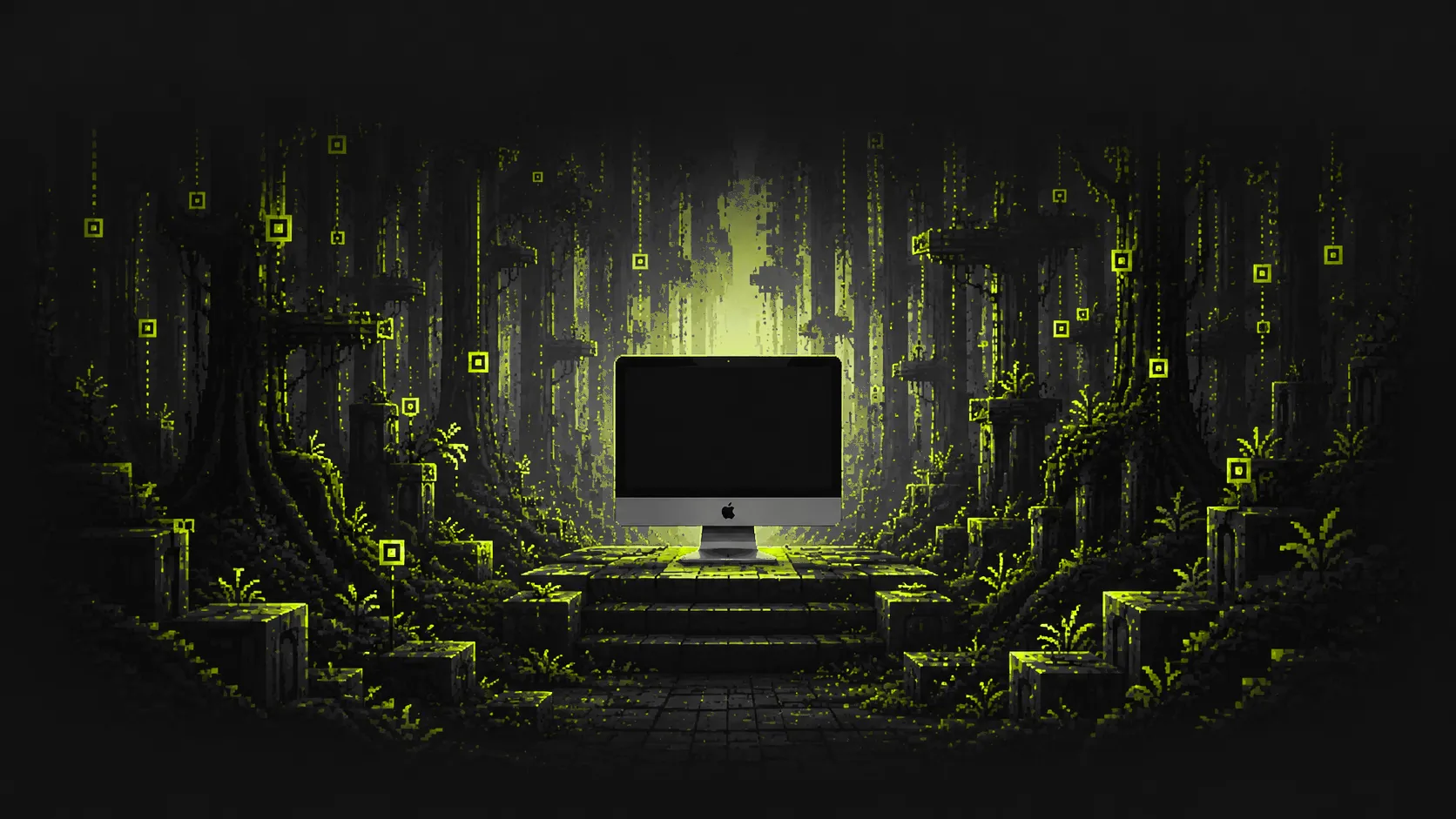
The whole thing is one WebGL layer under ordinary, editable HTML. Nothing about the storytelling costs the client their ability to write.
FIG. 02 — THE VINTAGE VIEW INHERITS THE HORIZON'S CURRENT LIGHT INSTEAD.
One horizon
A single full-page canvas carries the light. Sections don't start and stop — they change the sky's temperature as they pass.
Type as terrain
Vintage names are set at display scale and clipped by the coastline, so the words sit inside the landscape instead of on top of it.
Editable underneath
Everything readable is plain HTML in the CMS. The effect layer degrades to a still gradient with no loss of content.
Fig. 05 — the horizon shader reacting to scroll velocity, captured in the staging build.
“It finally looks like what we actually are — a place, not a lineup.”